 Death Leaves a Trace
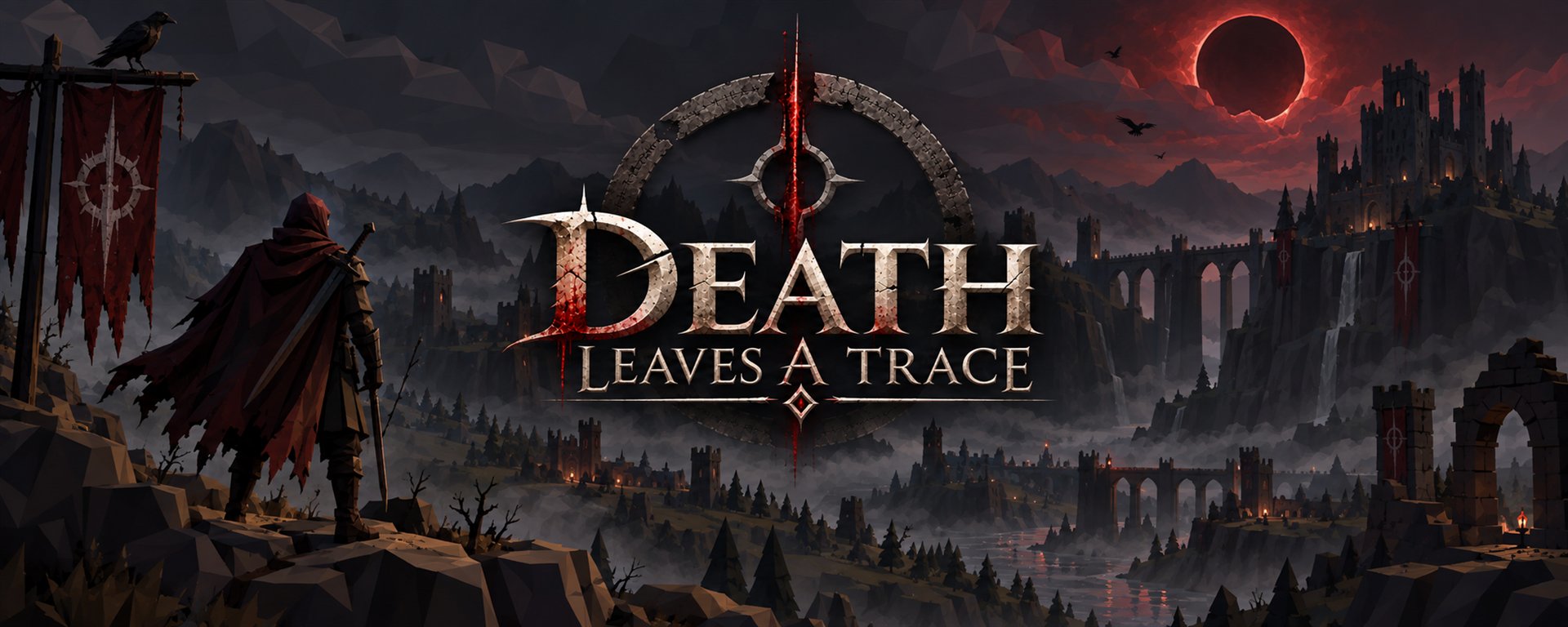
Here, the dead do not always rest
You wake up in a temple, a weapon in your hand, with no past. A stone in your pocket binds you to this place: when you fall, it brings you back. But never whole.
On the island of Ravenholm, every death leaves something behind. It is a mechanic and a world in the same idea.
The world is filling out fast to be ready for 26 November. Newborough has just risen from the ground, bigger and richer than Greywell, and the game menu has been rebuilt.
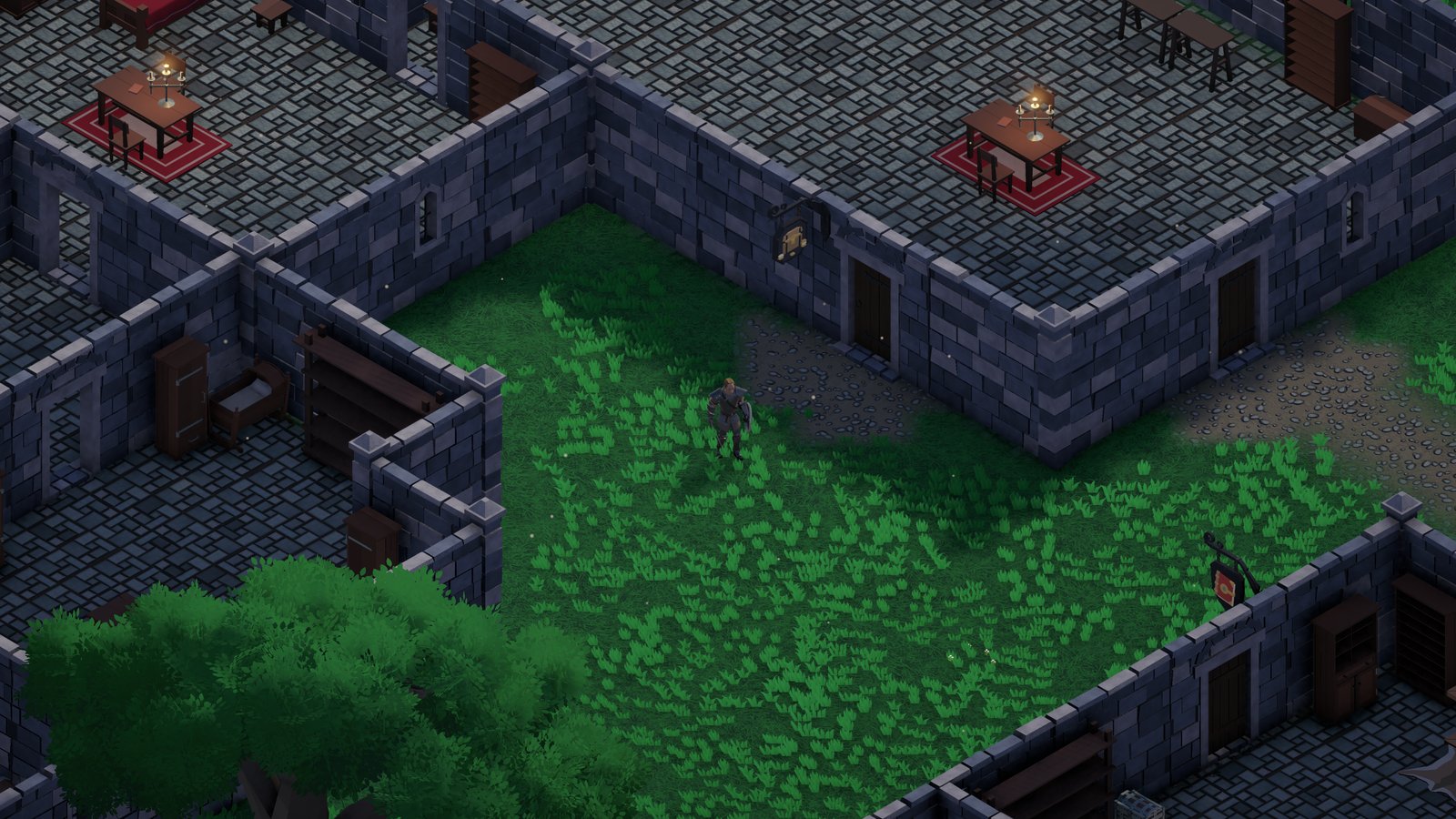
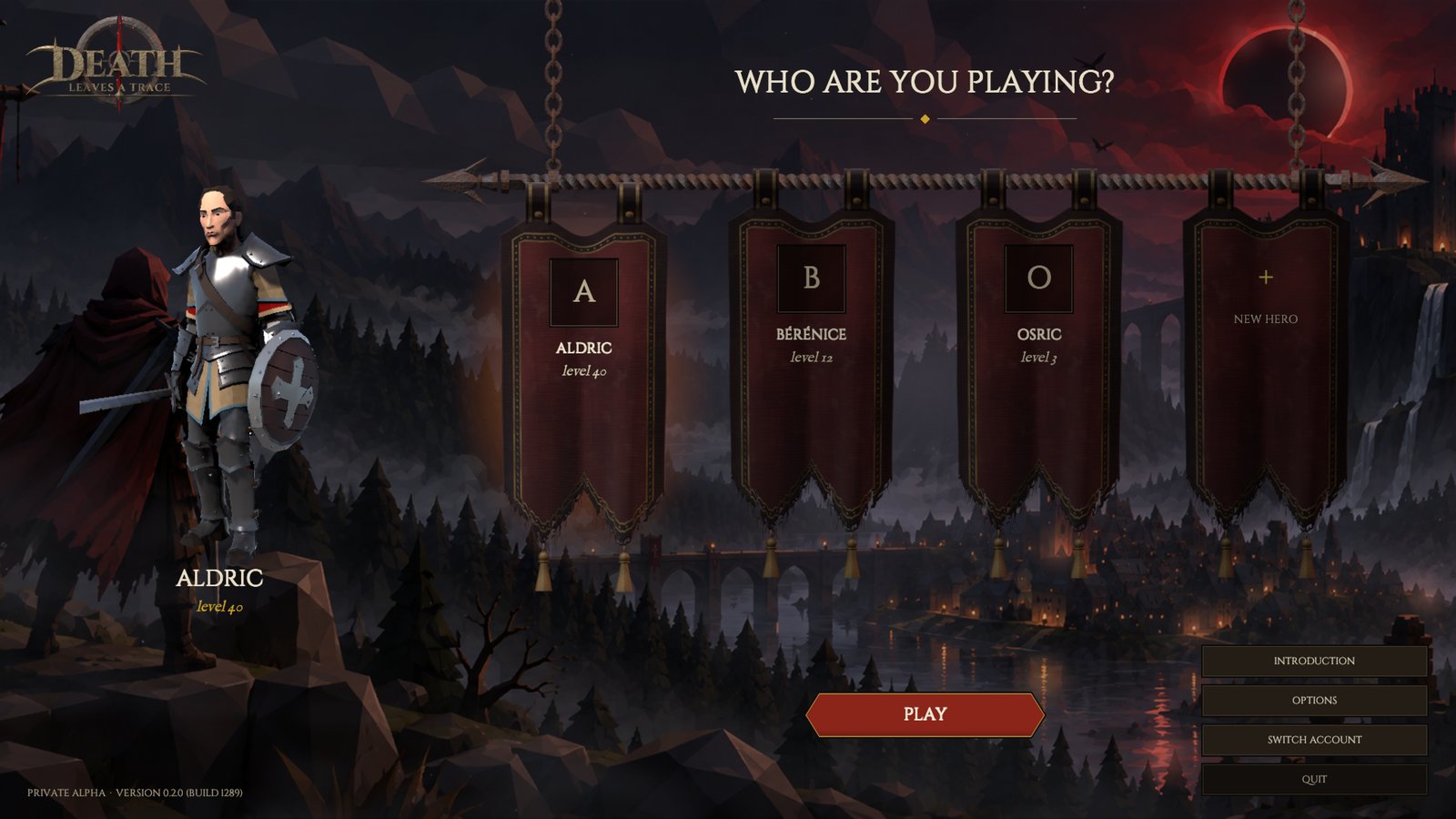
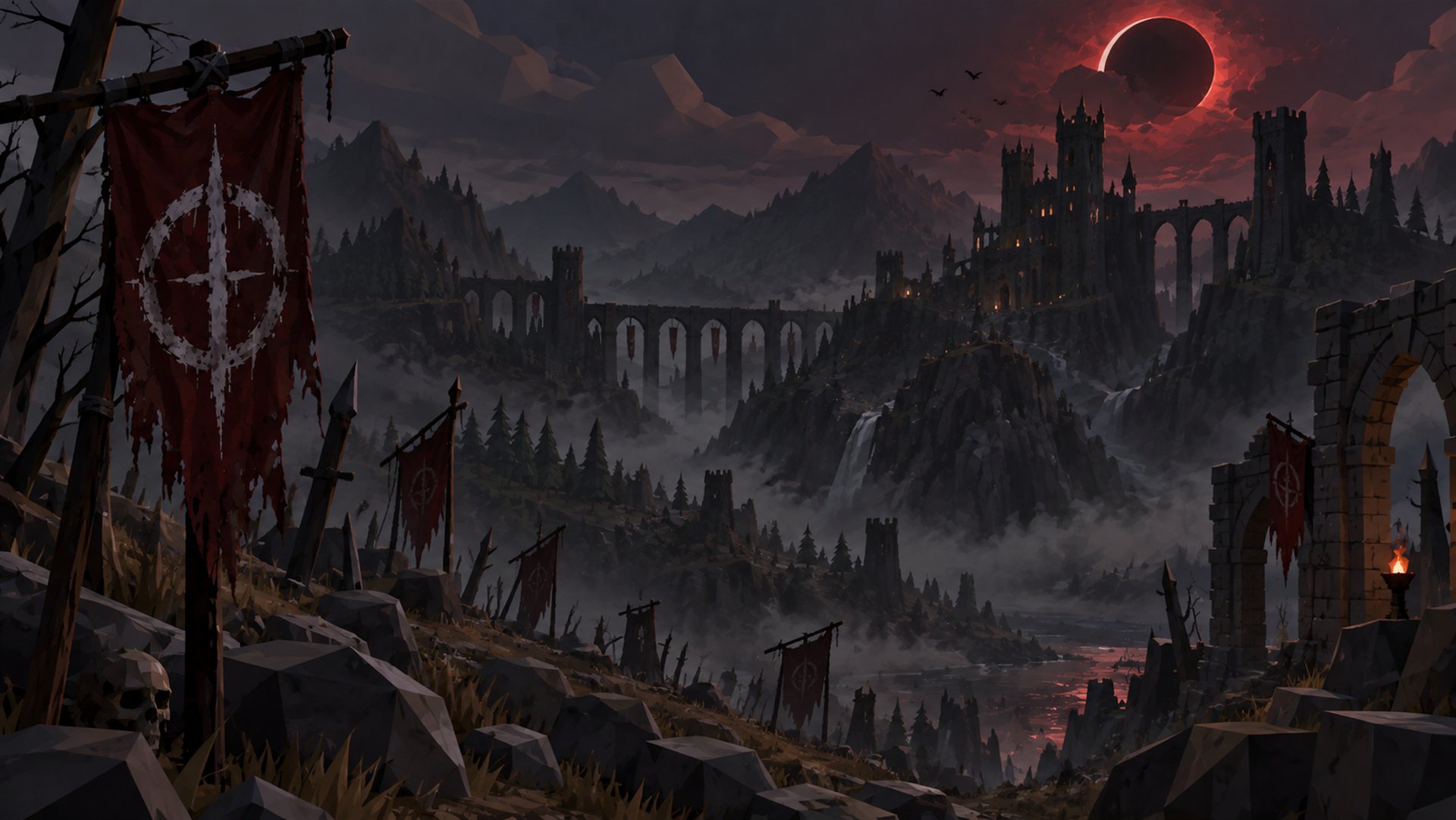
An island of grey stone, marsh and deep forest, beyond the roads of the mainland.
Sailors named it for its ravens.
Here, the dead do not always rest.
For what is left in the ground comes back, and walks.
Whoever the Temple brings back returns alive.
But not whole.
— From the prologue
Three generations came here for the stone, the fish and the land. They built a well, then a village: Greywell. Later, a richer town, Newborough.
Yet in the south of the island, no one builds. The land there is dead. There is iron under the black grass, bones under the earth, and things that should have stayed there. The elders call it the Bonefield.
No one knows who died there. No one knows who won. And no one knows why the ravens still go there.
Hover over a place, or tap it, to see what waits there.
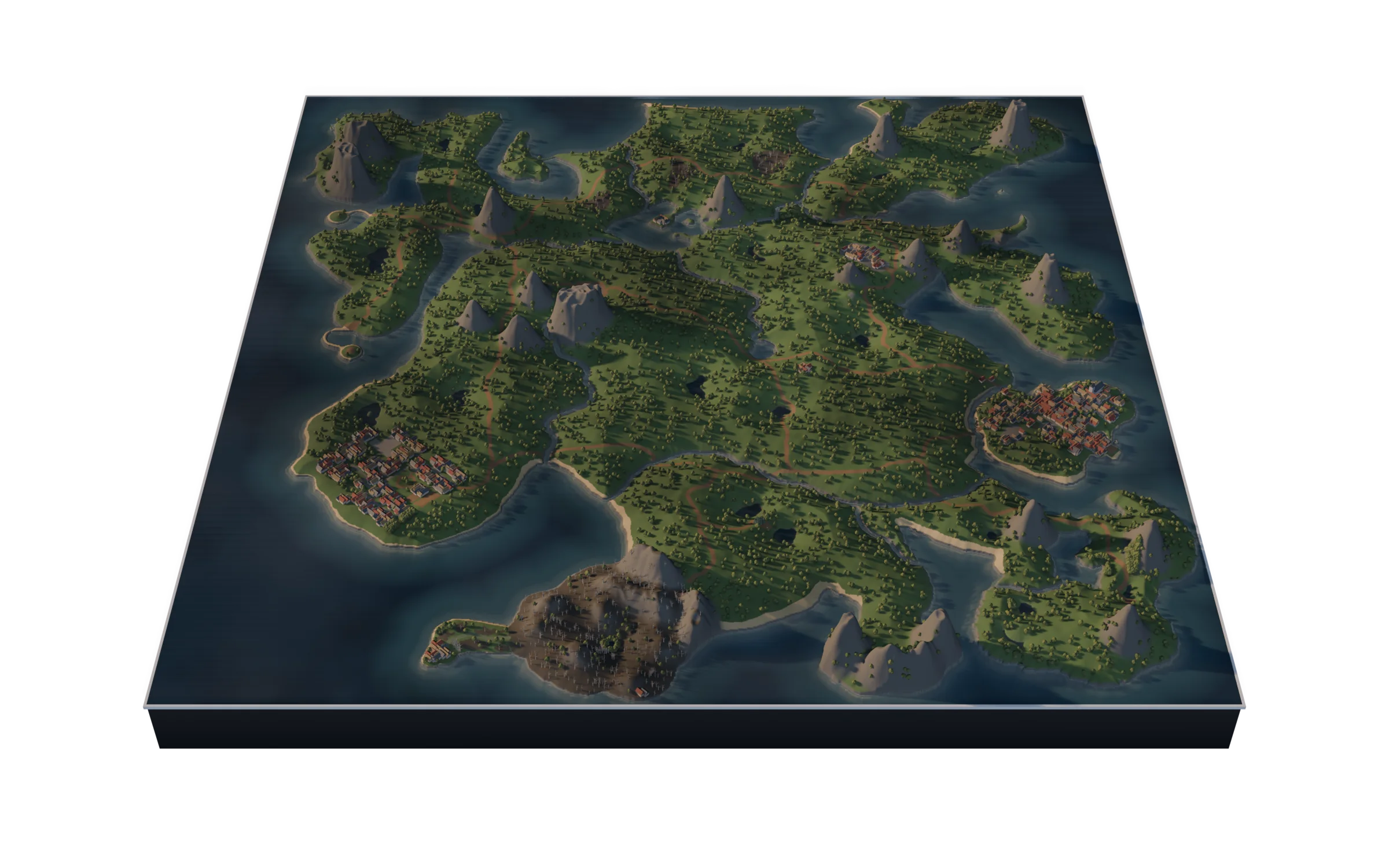
The village around the Temple, where everyone wakes up. Market, bank, forge and tavern.
Beneath the cemetery, the first dead who do not rest, and the First Buried in his open tomb.
Tunnel goblins and cave trolls, beyond a rope bridge over the chasm.
An abandoned quarry, three levels deep. The miners died in the collapse; they still dig, and their stone guardians still keep the forge.
Tents and a fire in the middle of the island, and a goblin who does not share.
Grey stone, where the first settlers came to quarry.
Reeds and still water on the west coast.
The second town, behind its rampart: town hall, tavern, bank, forge and armoury.
Built in October: its inhabitants are on their wayThe orchards of Newborough, by the sea.
In the south, no one builds. Skeletons in armour rise from the black grass.
An illustrated map, built from the game’s own maps: every tree and every house stands where it stands in the game. The relief is invented for the picture.
A fixed camera, seen from above. You click to walk, you click to strike. The fight starts on its own and goes on as long as the target stands. It is slow, readable, and it leaves you time to look around.
You walk. There is no other pace.
You engage it, you close in, you strike — to the end.
One decides whether the blow lands, the other what it costs you.
The bond brings you back to the Temple. You return. But not whole.
Each server takes five hundred players at most, and that is deliberate. Few enough that you end up knowing the names: who forges, who heals, and who you never turn your back on.
A community, not a crowd.
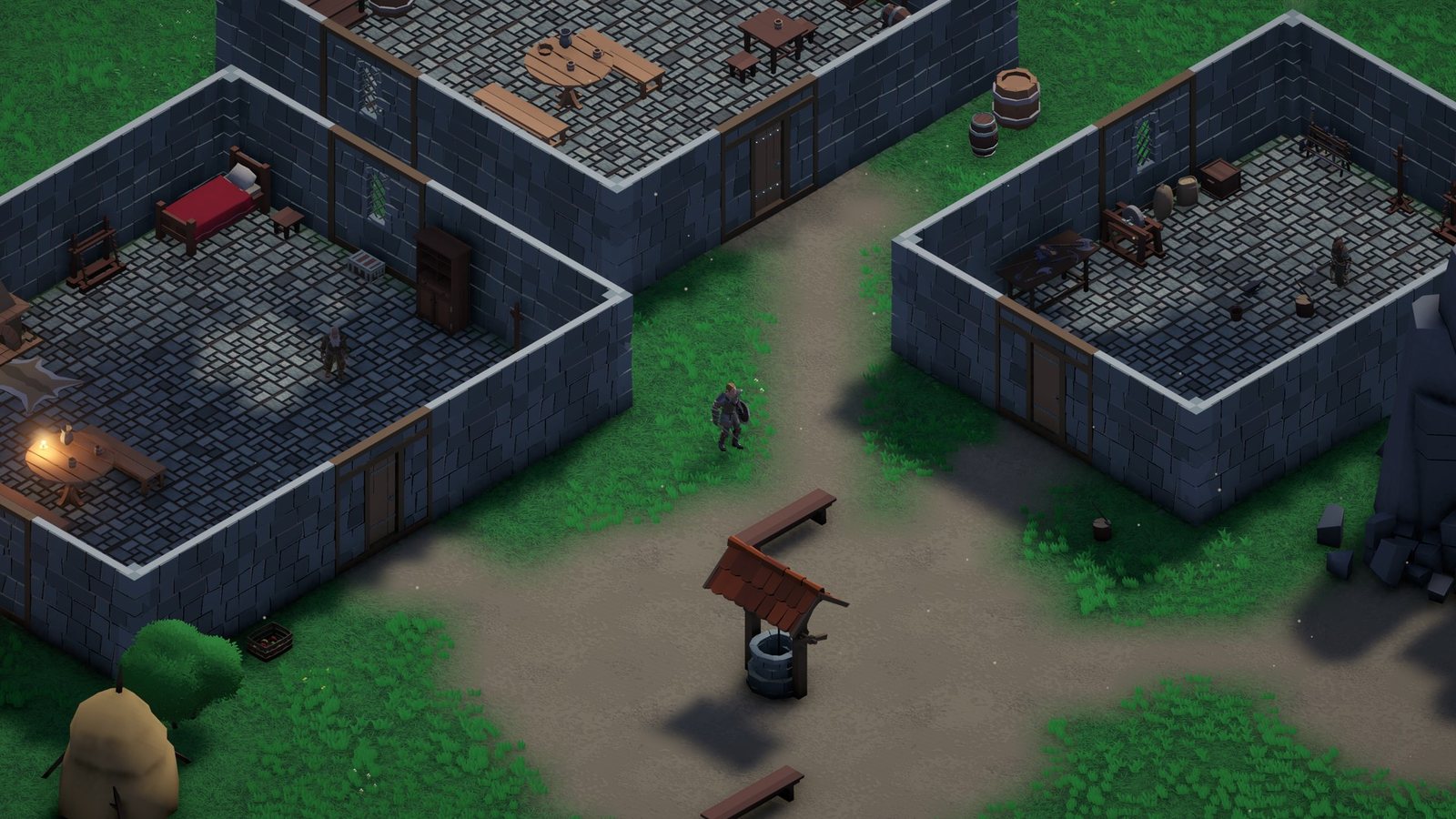
Most games at this stage show pictures. Here instead is where this one stands, today.
In the game today: one account with several heroes, a character shaped by their answers, their weapon and their looks, Ravenholm, its two towns and its temple, the first quests, a merchant, a trainer, the inventory, the character sheet, the quest log, potions, and a chat to talk from one end of the island to the other.
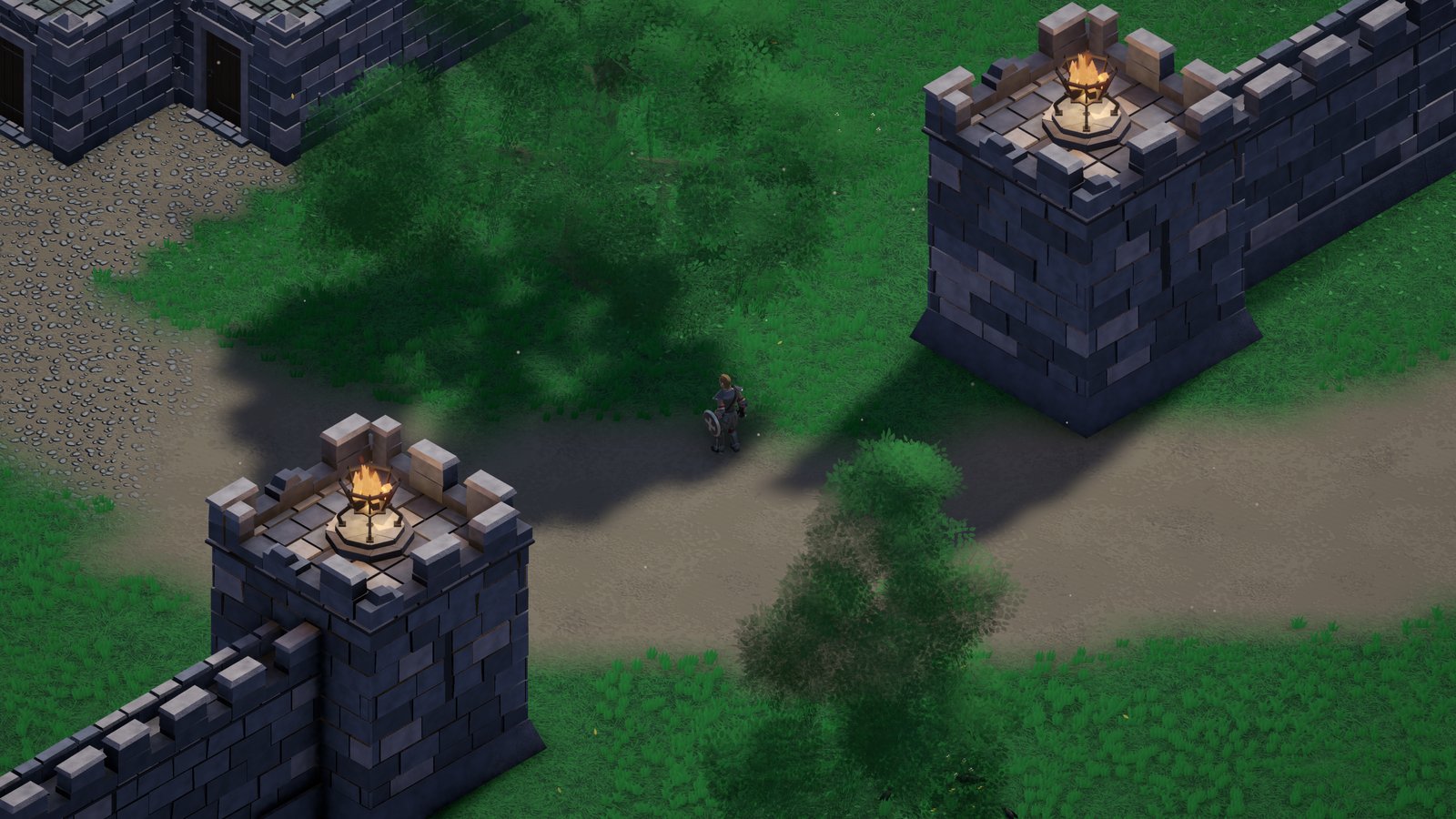
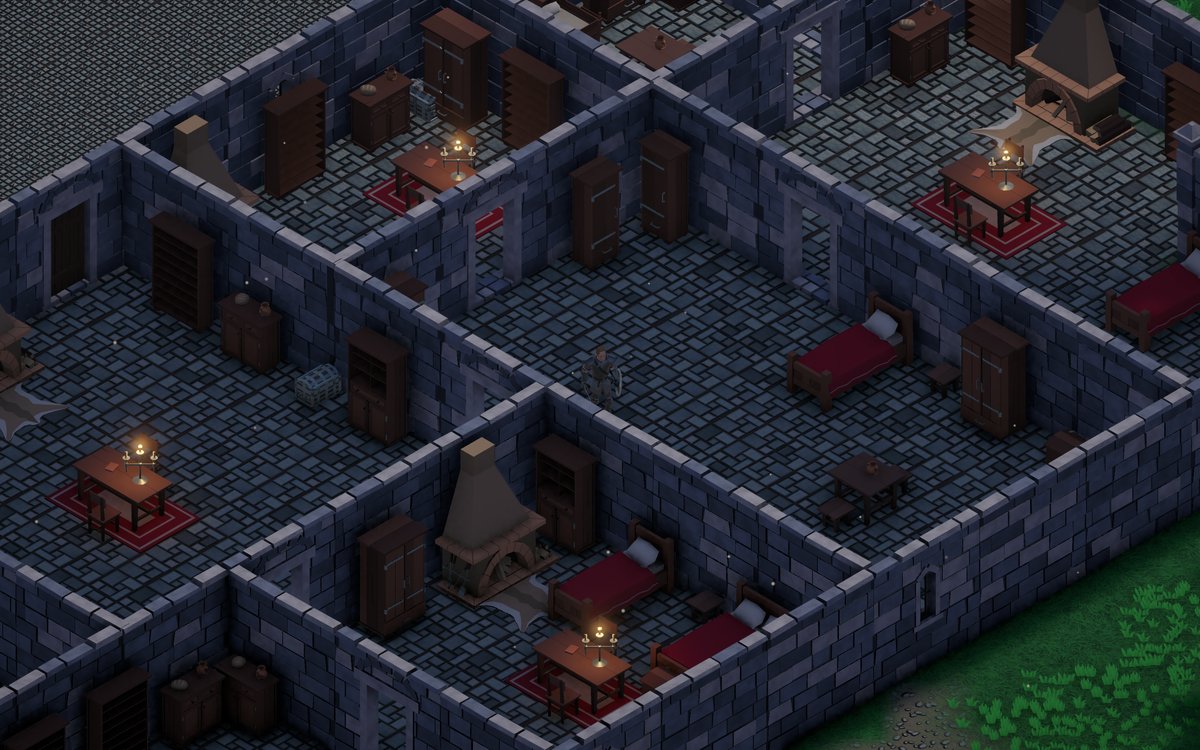
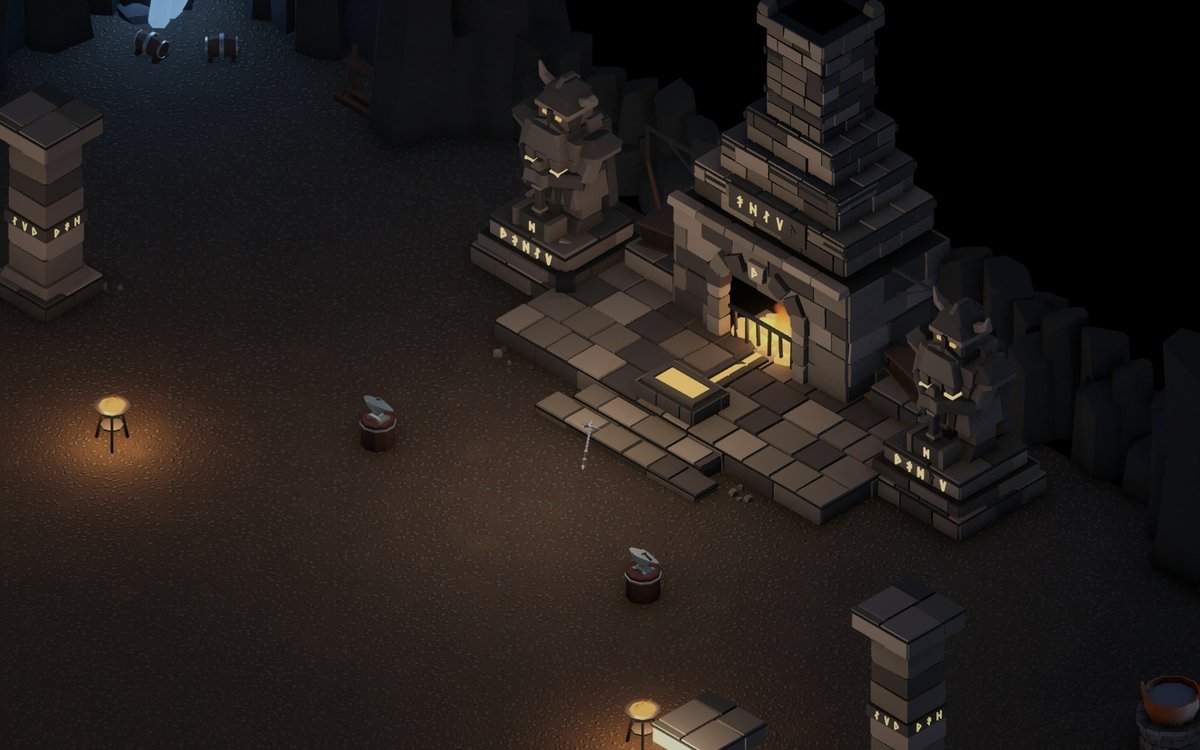

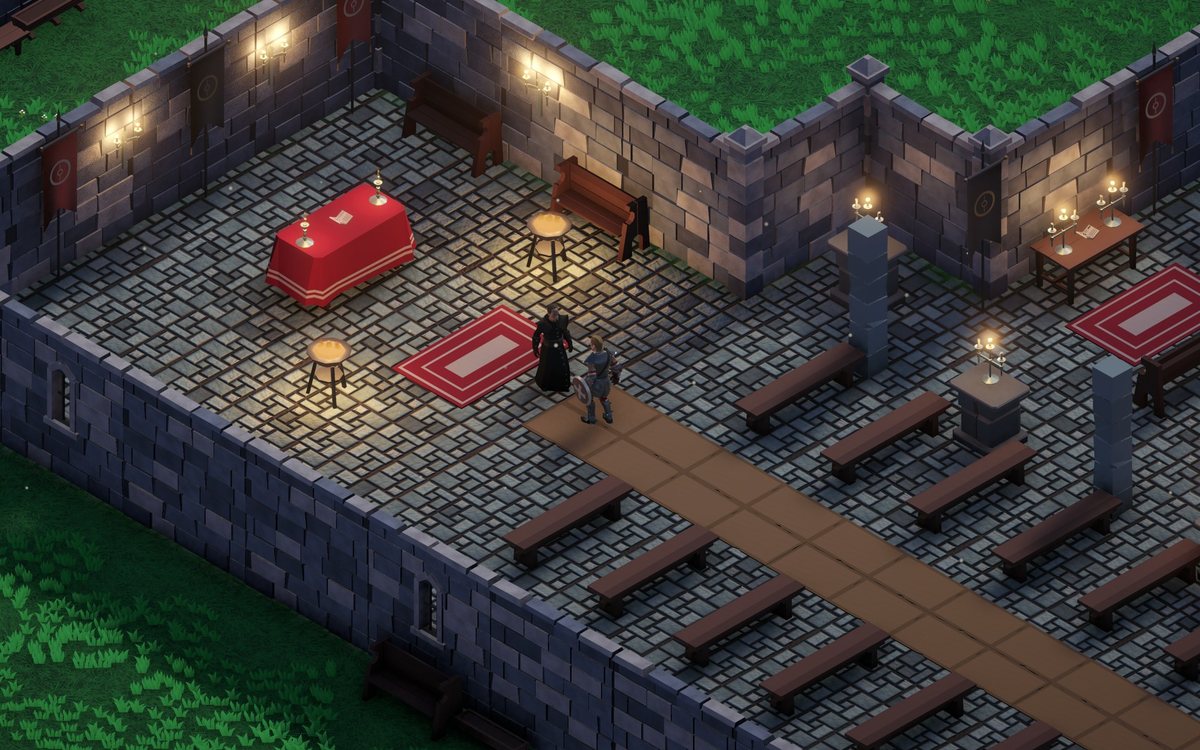
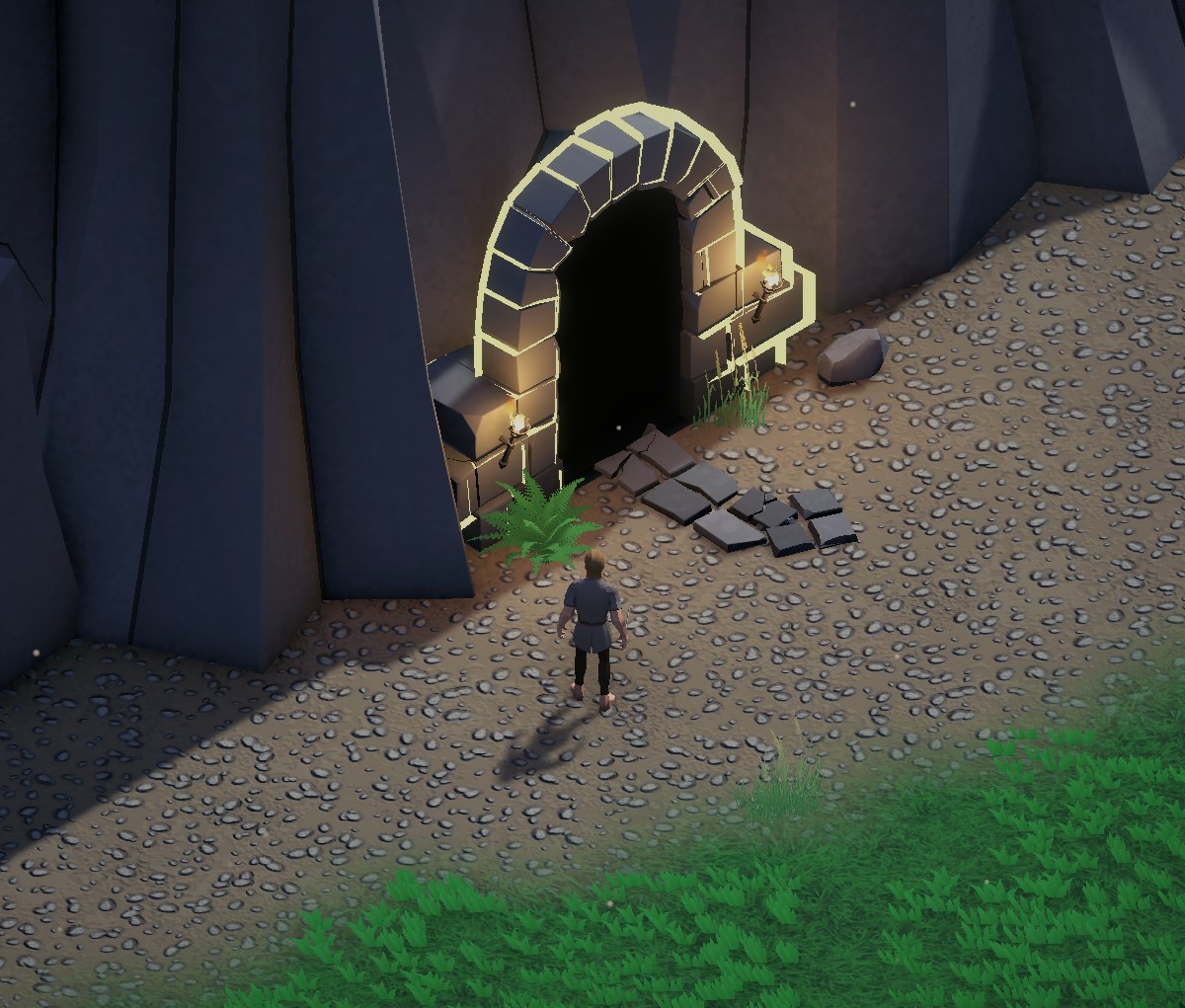
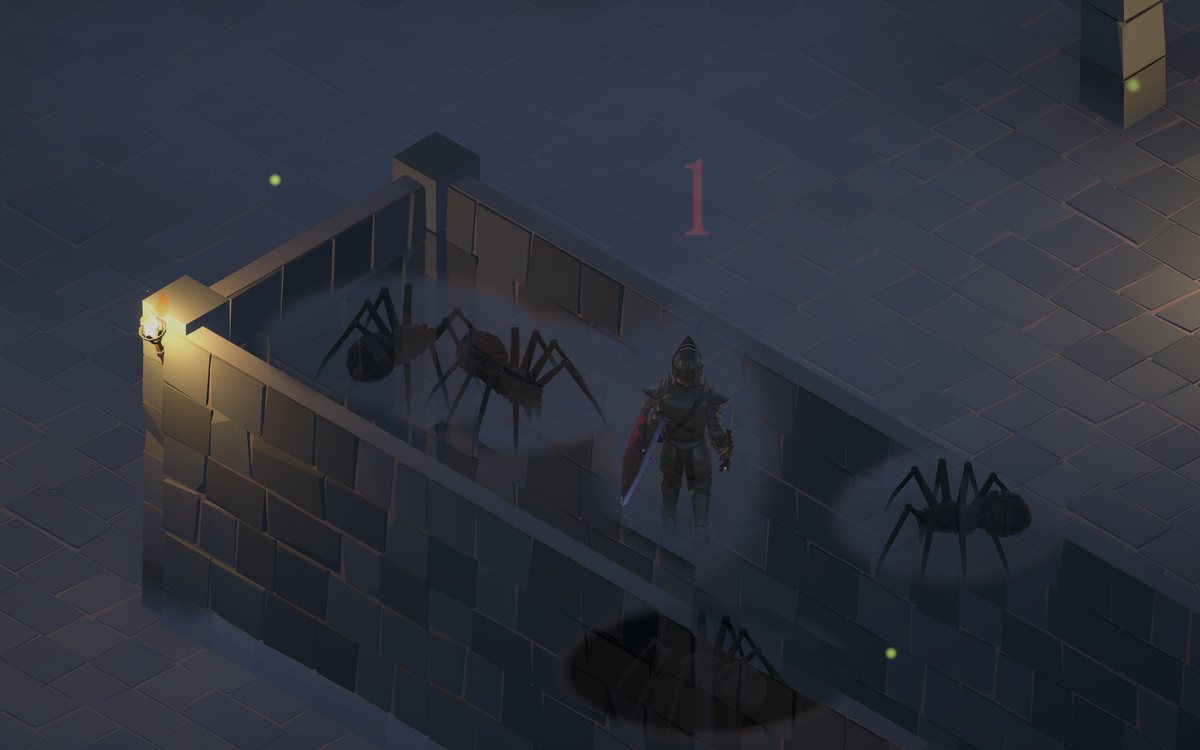
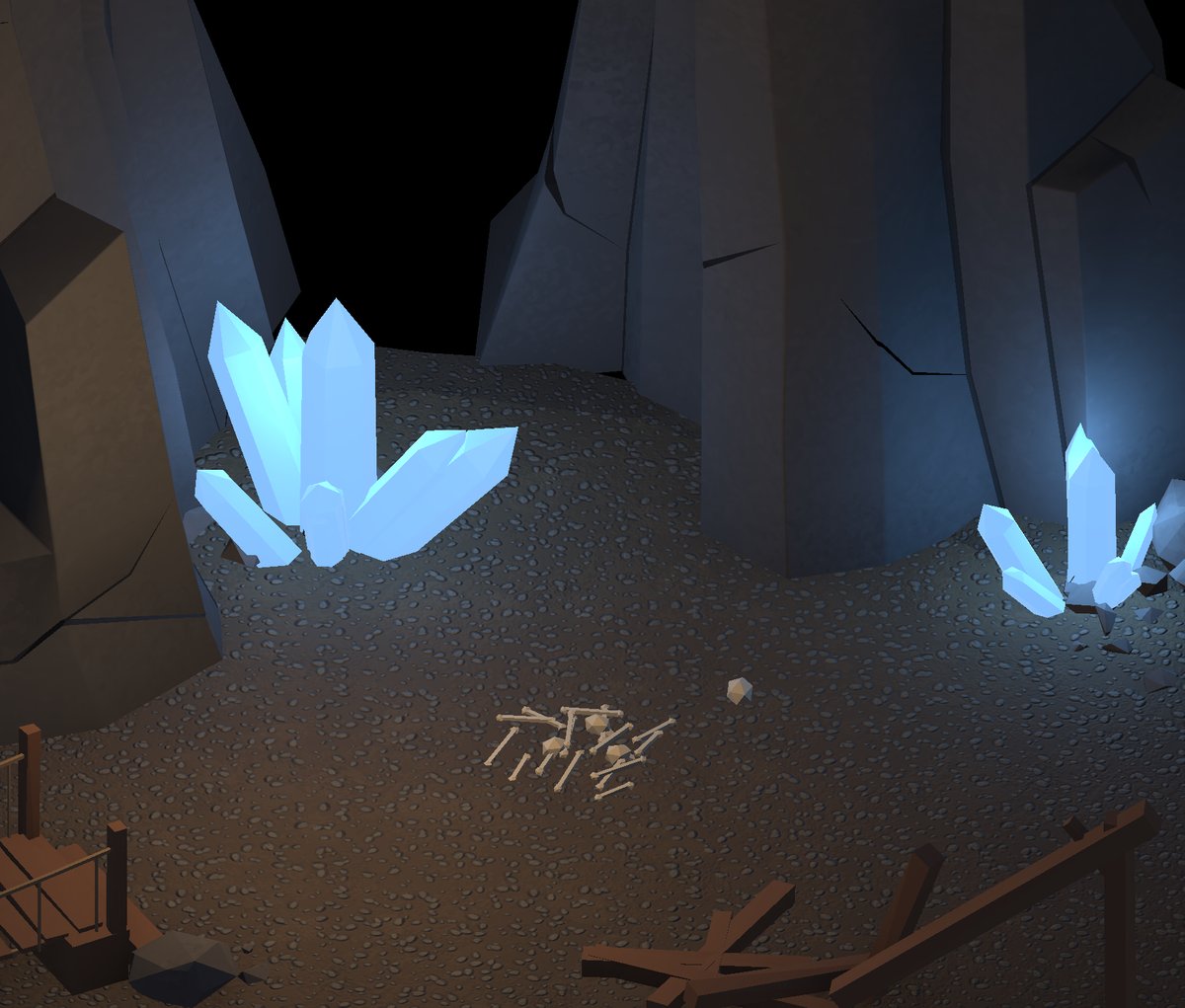
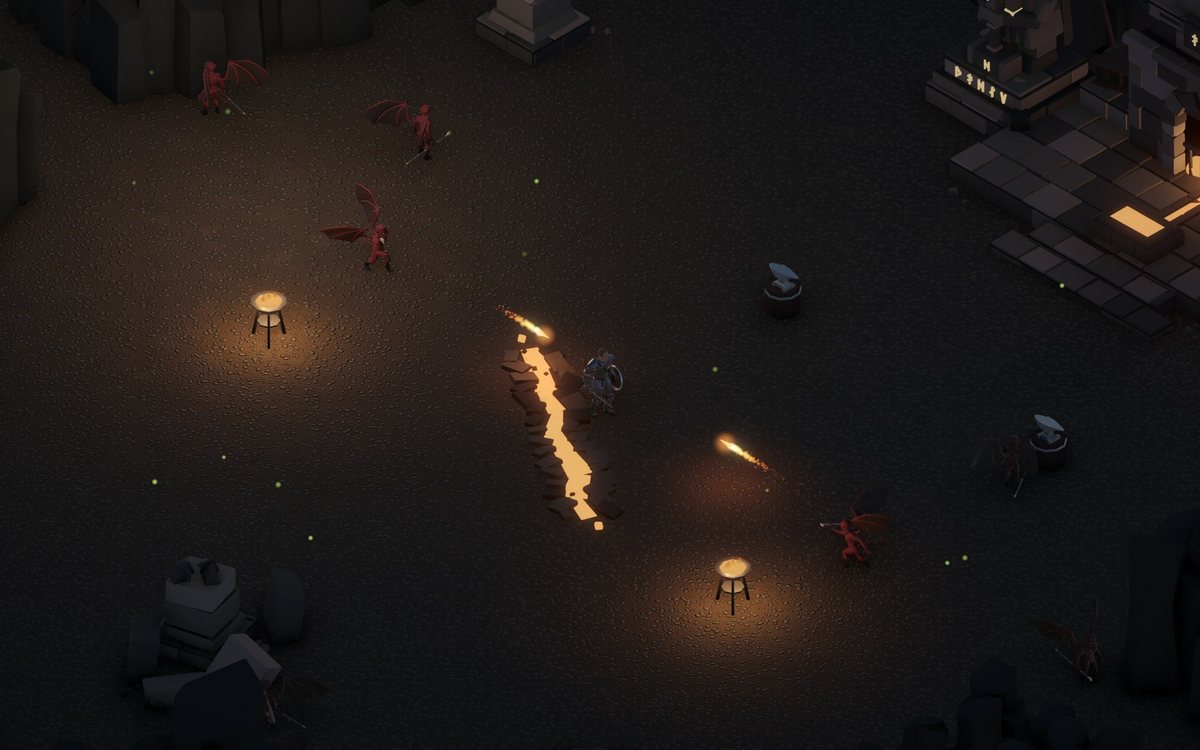
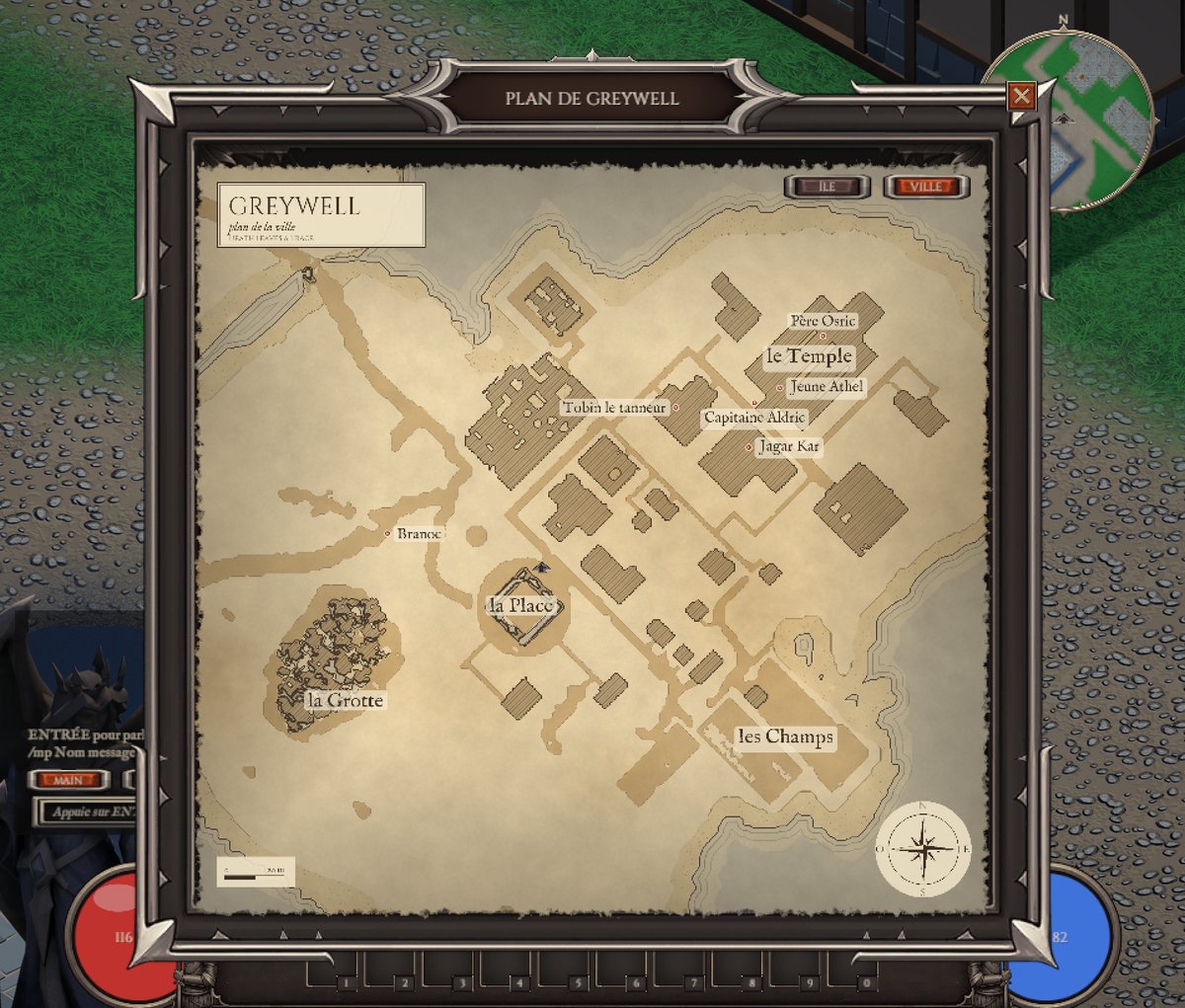


These images are captures of the game as it runs, untouched. The rendering, the light and the mood are still ahead of us — the illustration at the top of this page shows where we are going, not where we are. We would rather say so.
Everything happens on the Discord first: the news of the day, the patch notes, the alpha announcements, and the developer who answers.
The world is not built in a game engine. It is drawn in a painting program: an image where one pixel is one metre, one colour per kind of ground. Green becomes grass, blue becomes the sea, and the island comes out in a few seconds.
The rest — the houses wall by wall, the creatures, the items — goes through three tools written for this game and for no one else.
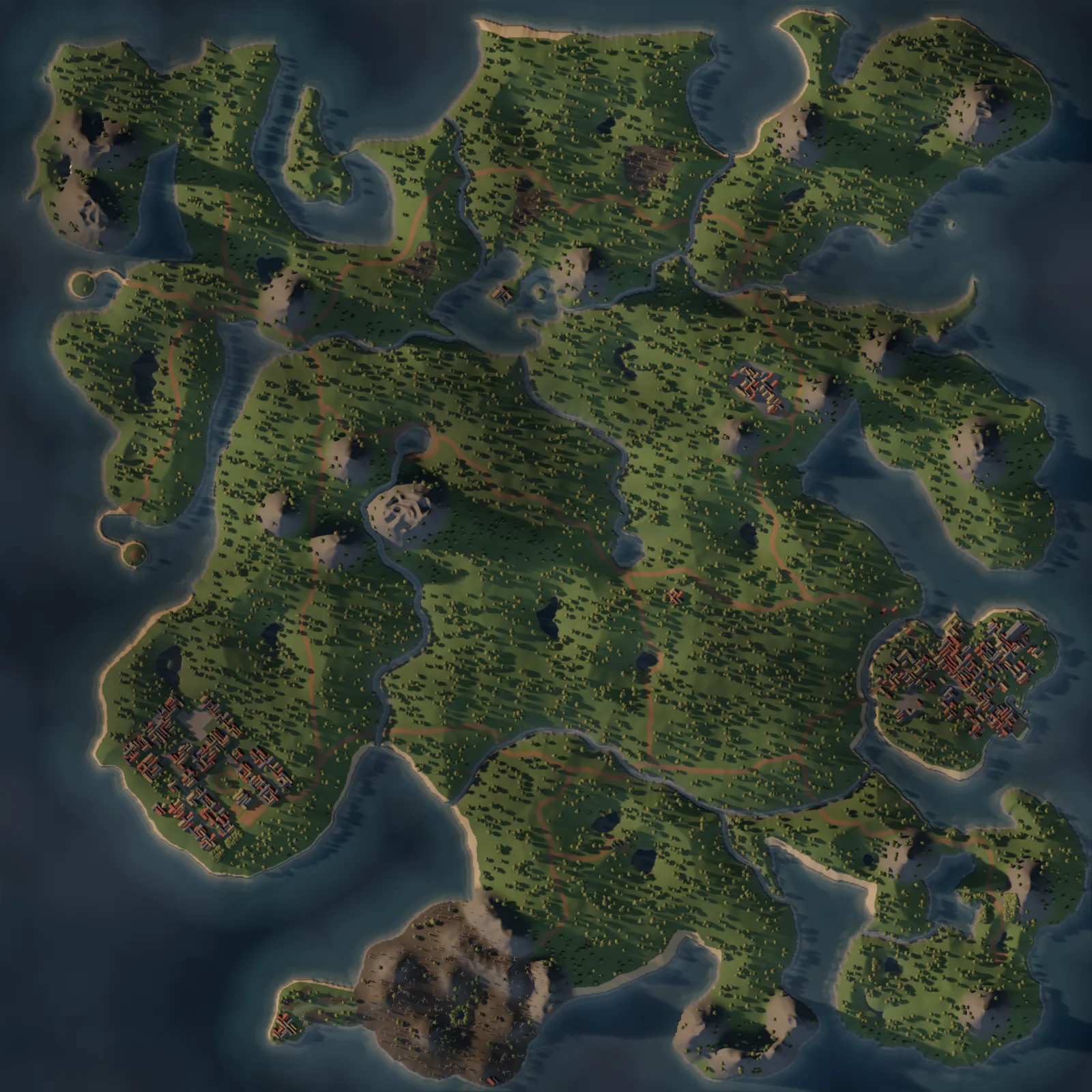
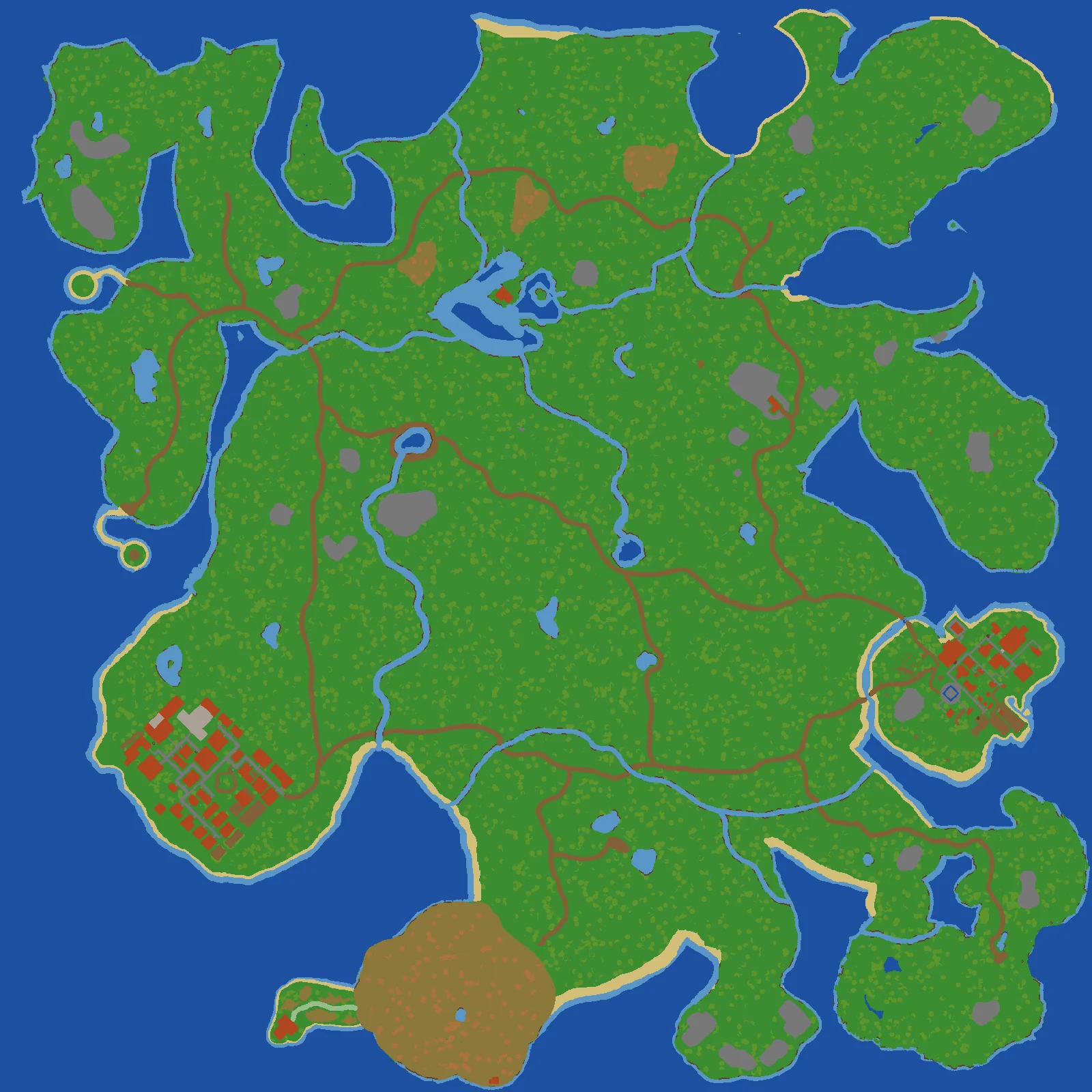
This game is made by one person, helped by an assistant that codes and tests. No publisher, no team, no imposed schedule.
One working rule: one thing at a time, and working before moving on to the next.
The game is not open yet. It will open first to those who followed the work.
Closed Alpha #2 opens on Thursday 26 November 2026, 9:30 pm (Paris time). 100 spots, sign-ups are open.